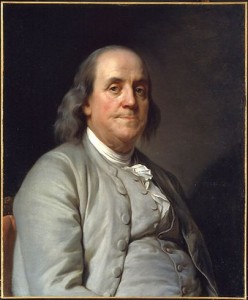
 We know that Benjamin Franklin was a great scientist, inventor, printer, businessman, diplomat, horseman, ambassador, mentor, public servant, and Founding Father. But we don’t often think of him as an author. But we should.
His scientific book about electricity made him a household name in all the civilized world at the time. It was the most widely read book in Europe. Franklin was also the author of a series of political satires that were held in as great esteem as books by Lord Chesterfield and Jonathan Swift.
 When John Adams was still a young attorney, the Boston Massacre took place. No lawyer wanted to defend the British soldiers that were accused of murder in the case. John Adams eventually learned that the whole matter would probably end with the British being found guilty. Because his cousin Sam Adams was there, John knew some of the facts. He also knew that no one would defend the soldiers.
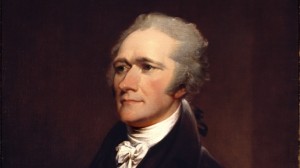 Alexander Hamilton was a favorite of General George Washington. Few remember that Hamilton was with Washington as he crossed the Delaware and captured the Hessian fighting force at Trenton in December, 1776. Hamilton actually lit the touchholes with the flames that fired the canon at the Hessian barracks that night. James Monroe, the future President, was in charge of the charge. You remember, they won that battle and much later went on the win the Revolutionary war.
 The past few days so many editorialists and commentators have touted that we have a great democracy. I must remind you once again, we, in America, do NOT have a democracy. Remember how after the Constitution was finally approved by the Constitutional Convention in 1787, Benjamin Franklin was asked “what was the result of the deliberations. What kind of government do we have?”
 Benjamin Franklin did not, no he didn’t, write the first American novel. However, as a printer, he did publish the first novel in America. The first novel written in plain English was “Pamela” by Samuel Richardson. That was published in London in 1742. Benjamin Franklin brought it to America and published it himself in his printing shop in 1744.
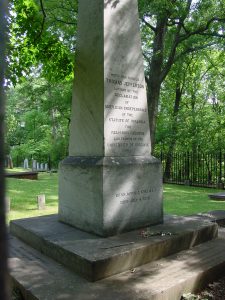 Some say that whatever a man has decided to have placed on his tombstone says a lot about what that man considered to be of greatest importance in his life. Knowing that you would think that a man who accomplished as much in his life as did Thomas Jefferson would need a large grave marker. Or perhaps he’d need several tombstones to give the full story.
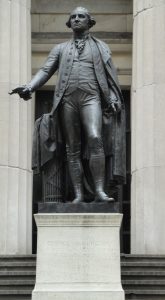 It may be “much ado about nothing”. I still believe that small details are and must be important. It may just be a small peccadillo. But for some reason it seems to be important to me. It may not be something to quibble about, but perception is everything. And it’s how I look at things, especially today—small things are important.
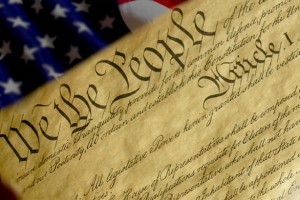 The U.S. Constitution is an amazing document. It is an agreement between the States, yes, the States. Not the individuals. The Founding Fathers came up with a wise method for such transitions of power. They had to please the large States as well as the small States in their method. That’s one reason we are not a true democracy. We are a Republic—if you can keep it, as Benjamin Franklin declared.
 Abraham Lincoln was one for corny jokes. Or of just plain joking about some corny or crazy situations. For example, one day two young men were having a quarrel. It looked to everyone that it may eventually become serious.
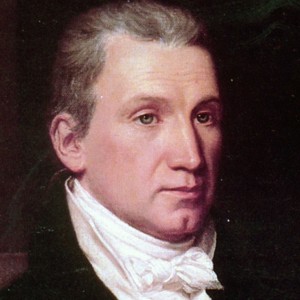 James Monroe, while not considered one of the Founding Fathers directly, did serve with and was influenced by them. Monroe was in the camp with George Washington in December, 1776. You recall that was the month that Washington directed the assault across the Delaware River in a snowstorm to attack the British and their hired warriors, the Hessians. The Hessian were considered the most mighty and brutal of all the fighting armies at the time.