U. S. History Patriotic Artwork

When I retired and closed my law office a few years ago, I had to bring my office artwork home. That included about 8 or 10 beautiful patriotic oil paintings, reproductions, art posters, and even plaster busts of George Washington, Benjamin Franklin, and Thomas Jefferson. And a full sized American flag on a pole.

Our home already had its own artwork on nearly every available wall, and this artwork didn’t really lend itself all that well to a family residence. So all the artwork was just stacked up near a wall in the back room. I couldn’t stand to part with such lovely pieces which I had become so accustomed to at work. So what to do? It can’t continue to still just languish there where it is! read more

Thomas Jefferson and the Written Word

whom?I have a Juris Doctor degree from Arizona State University College of Law. I am an author and have written five books. I’m currently working on a sixth. I was brought up in a home with a mother who was an English Major at the University. So I have a pretty good grasp of the English language!

Most are familiar with Thomas Jefferson’s writing at least in the Declaration of Independence. It is a masterful piece of written language! Tom was also a lawyer, a scientist, a linguist and a writer. Nowhere in the Declaration is the word “whom” used. But he could have used the word. It was in use in his time. But then he also powdered his hair on occasion, and wore a tri-cornered hat! read more

John Adams and Thomas Jefferson Teach Each Other

History is full of fascinating facts! Here’s just one example:

Thomas Jefferson, from Virginia, and John Adams from Massachusetts, became fast friends during the Continental Congress in Philadelphia. It was here that Tom wrote the Declaration of Independence in only 17 days without book or pamphlet, while residing at the Graff House.

When Tom’s draft was presented to the Congress, Tom did not speak on its behalf, on behalf of his immortal document. Tom was not a very good public speaker. His voice was high and shrill and barely audible to a group. read more

James Madison and The U. S. Constitution, Then and Now

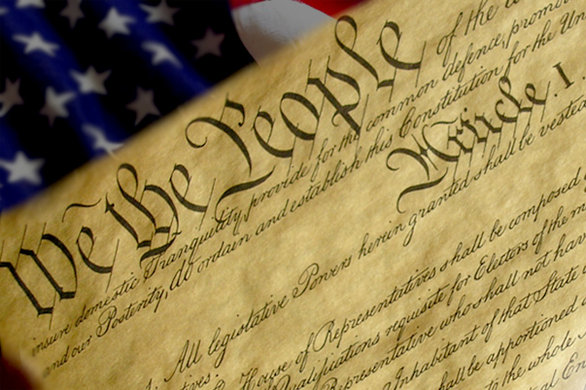
constitutionAfter 16 weeks of unrelenting work, the U. S. Constitution was signed on September 17, 1787. It was truly a miracle! Those who attended the Convention worked hard, studied hard, listened hard to others, and even prayed hard. They knew what they were doing was important for the centuries.

James Madison, known as the Father of the Constitution, had remarkable success in bringing together the most influential and wise men in the colonies, including George Washington, who didn’t want to be there at first. read more

Thomas Jefferson’s Thoughts and The Declaration of Independence

Jefferson said: “The glow of one warm thought is to me worth more than money.”

monticelloI guess that’s literally true. Tom had many great and warm thoughts, but he spent his money liberally. (Is that why the liberals like to spend money so fast—yours and mine?)

When he died, his family had to sell whatever they could of his to pay his debts. But Monticello has been restored to its glorious condition today. If you haven’t visited there yet, make it a point to do so. You can learn so much from just a visit to his home, see how he lived, and what he loved to design and to collect. And how dear he held his family in his thoughts. read more

Music and the Founding Fathers

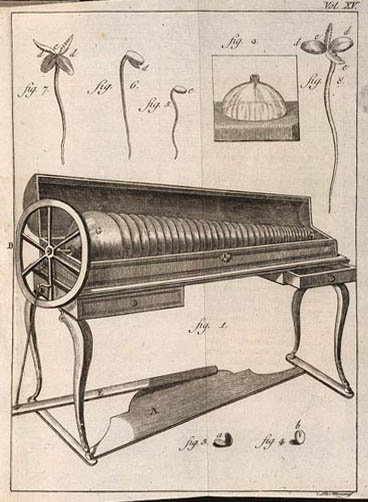
Benjamin_Franklin's_glass_harmonica_(LoC)_edited

Benjamin Franklin’s Glass Armonica

Did you know that Thomas Jefferson was also a musical devotee. That’s why he and Martha Wayles Skelton were so enamored with each other at first. Martha would play the harpsichord and Tom his violin. They loved to sing and dance. Tom ordered a beautiful harpsichord from his agent in Europe, and had it shipped to Virginia as a wedding gift for Martha. So among all the other talents Tom is credited with, music must be counted.

George Washington also loved to dance and loved music. That’s why he and Martha Custis originally hit it off so well together. George loved to have young people come to dances at his home at Mount Vernon. When George walked into the dance parlor, music and dancing would stop, and the youth would stare at George. So George, instead of entering the dance hall, would sometimes stand at the door and look through a crack between the doors to enjoy the dance. read more

George Washington Says Listen Up!

Scene_at_the_Signing_of_the_Constitution_of_the_United_States“Listen twice as much as you talk and others will hear twice as much of what you say.” Nido R. Qubein. Nido should know. He’s the President of High Point University, and a professional speaker.

This quote reminds me so much of George Washington. George would listen carefully to his soldiers in the Revolutionary War—and you know how that turned out!

I think the best example of Washington’s listening skills took place at the Constitutional Convention in Philadelphia. George was elected President of that convention, even though originally he didn’t intend to attend. He listened to his friend James Madison, and decided he must be there. read more

The Constitution, American History and Economics

Just thought you’d like to know about how you can get a little more learnin’. You know, things about George Washington, James Madison, Patrick Henry, and important documents like the Declaration of Independence, the U.S. Constitution, the Bill of Rights, and much more.

Hillsdale College has more than 830,000 students enrolled in its free online courses, covering topics such as the Constitution, the principles of free-market economics, American history, the Western Heritage, and more. These courses are transformative—they can and will have a profound effect on the future of our country, especially at such a time as this. read more

Hebrew Law and U. S. Law

Illgegal Trial of Christ coverI’ve been re-reading a 2 volume work by Walter Chandler entitled “The Trial of Christ.” This book explains the Hebrew rules of court in great detail. It likewise explains the Roman laws, which were necessary because Judea was a nation conquered by Rome prior to the trial of Christ.

The amazing thing is it’s a wonder that anyone was ever found guilty of a crime punishable by death because the rules were so stringent about witnesses and judges (members of the Sanhedrin). But then as you read the accounts in the four Gospels of what transpired to bring Christ to the cross, you see vividly how many of the laws and rules of procedure were intentionally violated. read more

Witness Against Yourself

judicial scalesIn Federal criminal cases only about 3% actually go to trial. The remainder are pleaded down by the prosecution in agreement for a guilty plea by the accused.

It is interesting to me that in ancient Hebrew law, the accused could not be convicted based on his own testimony. I was reminded of that as I read this comment in the book “The Trial of Jesus” by Walter Chandler:

“Some weak-minded people, unable to support the torture of a harassing examination, and eager to regain their liberty, make a full confession, accusing themselves in order not to be indicted. . . .from want of responsibility . . . accept or confirm everything of which they know nothing.” (Vol. 1, page 143). read more