
 In his elder years John Adams and Thomas Jefferson rekindled their friendship. They carried on a correspondence that covered every known topic. They were both very learned gentlemen and together they had accomplished more than anyone could have expected. Thomas Jefferson wrote the Declaration of Independence without books or reference materials. John Adams carried the day at the convention by his forceful power of speaking.
They continued their association in letters and wished they could actually spend some quality time together, but never were able to. John Adams’ wisdom on this friendship is contained in these words of his: “Old minds are like old horses; you must exercise them if you wish to keep them in working order.”
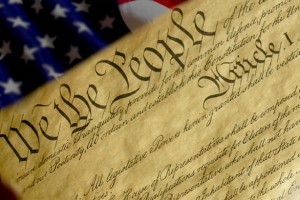 We learned in our Contracts class, that to understand a contract you had to look into the “four corners” of the document to understand the basic premise. That apparently isn’t the case with the most important document in the establishment of the nation, the Constitution.
 To All You Mothers Out There:
 Thomas Jefferson was serving in Congress in August of 1775. At their break he was happy to return to his home at Monticello. His happiness soon turned to grief. A month after he arrived home, his second child, one year old Jane Randolph Jefferson, died. Jane had been born April 3, 1774, only 3 ½ months after the Boston Tea Party had taken place.
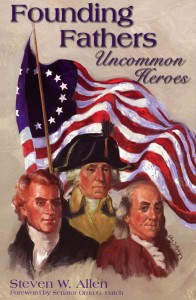 Benjamin Franklin, who took part in most of the life changing events of his time, lived to be 84. He died in 1790.
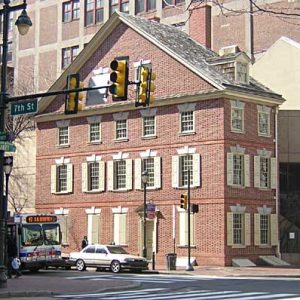 It’s absolutely a fact that the Declaration of Independence was written by Thomas Jefferson, in Philadelphia. Jefferson was a member of the committee assigned by the Continental Congress to create such a document if one should be needed. The committee was made up of Benjamin Franklin, John Adams, Thomas Jefferson, Robert Livingston, and Roger Sherman. They chose Jefferson to write the draft for their review and approval. He did. At the Graff House. The committee approved it with only minor changes.
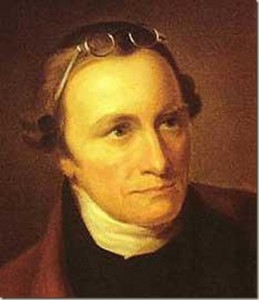 The Second Continental Congress was called on May 10, 1775, in Philadelphia, Pennsylvania. Patrick Henry was elected by the people of Virginia to represent them at their own State convention. It wasn’t even a State yet! But that’s why Patrick Henry stayed home rather than attend the continuation of the Second Continental Congress like Thomas Jefferson, John Adams, and Benjamin Franklin.