Benjamin Franklin and the Constitution

“The Constitution only guarantees the American people the right to pursue happiness. You have to catch it yourself!” –Benjamin Franklin
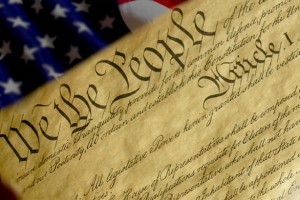
Of course Franklin knew these words were directly in the Declaration of Independence, which was upheld by the United States Constitution. He helped draft both of them. But the meaning of the direct words is vouchsafed by our Constitution.

And he was a printer by trade, so he was careful with words. So he knew what he was saying. That is, that the Constitution protects you unalienable rights to pursue happiness, you still must pursue it and “catch it!” It’s all up to you. read more
Our (In)justice System

If you would like to know
–Why are 97% of Federal prosecutions pleaded down (and only 3% actually go to trial);
–Why our inmate population has increased by 800% over the last 35 years;
–How the courts have turned to be more like the inquisition than the advocacy system;
–Why an accused agreed to accept a plea agreement in a criminal case, but was later found completely in the right by the civil courts;
–Why the prison system has grown, and become ever more expensive;
–and more, read more

The Ages of the Founding Fathers

The Founding Fathers were industrious and positive thinking men. They lived not only fruitful lives, but lives full of activity, wisdom, leadership, and friendship.

Benjamin Franklin, who took part in most of the life changing events of his time, lived to be 84. He died in 1790.
George Washington, the indispensible man, our nation wouldn’t exist without his accomplishments, died at the age of 67. He died in December of 1799, just before the new century was rung in.

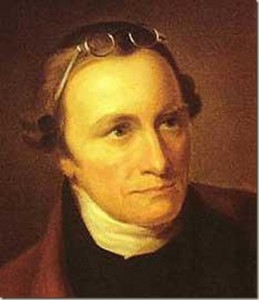
Patrick Henry also died in 1799. He was known as America’s noble patriot and the first national hero. He was only 63 when he left his family of 17 children. read more

Lessons From Prison

Patrick Henry warned us about losing some of our rights, even with the new Constitution. Yes, just as he warned, I was unjustly and falsely accused of conspiracy to defraud the government. To avoid a possible 37 year prison sentence, I accepted a plea offer. Later I was exonerated when the civil court decided I had done no wrong.

Read about this In my upcoming book “A Patriot Imprisoned.” Sometimes people ask me how I could have made it through confinement, imprisonment, and detention, and remain confident, optimistic, and even positive? It’s because those are my choices. That is my character. read more

The U. S. Constitution

In this Easter season I’ve been posting about the Illegal Trial and Crucifixion of Jesus Christ. It all began because all Hebrew authority was concentrated in their Great Sanhedrin (they were allowed to govern themselves as a ‘client state’ of Rome). There were no checks and balances. Christ was found guilty of blasphemy.

There was no death penalty allowed to be carried out by the Sanhedrin without the express approval of the Roman representative. Hence, the Chief Priests took their guilty subject to Pontius Pilate, the governor of Judea as representative of Caesar. They wanted approval of their death penalty crime. It was granted. read more

John Adams and the Revolution

It doesn’t get much notice these days, but John Adams actually had quite a bit to do with our country becoming independent. One very interesting letter was written by Adams in support of William Hooper’s (William Hooper, who’s he?) preparation of a new written constitution for the State of North Carolina. This letter was later published by a Philadelphia printer. Here’s one sample paragraph:
“It has been the will of Heaven, that we should be thrown into existence at a period when the greatest philosophers and lawgivers of antiquity would have wished to live . . . . A period when a coincidence of circumstances without example has afforded to thirteen colonies at once an opportunity of beginning government anew from the foundation and building as they choose. How few of the human race have ever had an opportunity of choosing a system of government for themselves and their children? How few have ever had anything more of choice in government than in climate?” (“John Adams”, by David McCullough, page 102). read more

A Republic—If You Can Keep It!

Benjamin Franklin was asked one question as he left the Constitutional Convention in Philadelphia after the meeting had adjourned on September 17, 1787. He was asked by a widow as Ben walked slowly down the steps: “Well, Doctor Franklin, what have we got, a Monarchy or a Republic?”

His response was quick, full of meaning, and authoritative: “You have a Republic—if you can keep it!”

A part of keeping such a Republic depends on the character of those who govern themselves. That’s because the people are the source of all lawful authority. Americans are free and inherently independent of all but THE MORAL LAW. America does not have a unified religion or a common theology, but we do have something we have to depend on for our freedom. That is a common morality shared by all citizens and that morality is rooted in faith and reason. read more

Thomas Jefferson and the Crime Commission

After reviewing some things I have in common with John Adams, I had to remember why I started studying the Founding Fathers anyway. As a young lawyer I was appointed by the mayor of Phoenix, Arizona, to be a member of his “Citizens Crime Commission,” a group of volunteers who met monthly and discussed methods the Mayor could use to alleviate crime in the City.

In those days, every major city in America had such a commission. There was a National Citizens Crime Commission. It was 1976, the Bicentennial of the Declaration of Independence. The National Commission was holding its national convention in Philadelphia that year. I was elected to represent the Arizona Crime Commission at the national convention. What an honor. read more

Our Foundational Documents

People began moving to America for various reasons after it became a real possibility to make a life here. The real Founding of America as a new nation began with the French and Indian War in 1763. George Washington played a major part in that war as a member and leader of the Virginia militia, which was subject to the British General.

Then the Revolutionary War essentially began with the shots fired at the Battle of Lexington in 1775. George Washington was appointed to be the first Commanding Officer of the United Colonial Army soon thereafter. read more

The Founding Fathers and the Constitution

James Madison, known as “The Father of the Constitution”, explained that those prominent men at the Constitutional Convention in Philadelphia, wanted the Constitution to be understood by the American population..

Gouverneur Morris (yes, that was his name) was named as the scrivener, or the man to put the concepts that were agreed upon in the meetings, into final form. In plain English. It was his intention to write the new document so it could be easily understood by a person with an eighth grade, or similar, education. read more