 After Thomas Jefferson completed his draft of the Declaration of Independence, he submitted it to the committee ordained for that purpose. They made only a few changes or suggestions. Then it was placed before the whole Congress for its adoption.
Thomas squirmed as members of Congress made their own remarks and suggestions. John Adams defended it. Benjamin Franklin turned to Thomas Jefferson and told this tale from his days as a printer:
“One of my friends, an apprentice hatter, had decided to open a shop for himself. His first concern was to have a handsome signboard with a proper inscription. He composed it in these words: ‘John Thompson, hatter, makes and sells hats for ready money,’ with a figure of a hat subjoined.’ But he thought he would submit it to his friends for their amendments.
 John Adams who had spoken fervently in Congress that such a proposition should definitely be approved, was excited. He was so proud of this accomplishment that on July 3, he wrote home to Abigail:
 Several years ago, the King at the time told a friend how he had sent 14 of the brightest young men of Rumania to receive some training for future service in the government. He had sent 7 to England and another 7 to the United States of America, to study the respective political and even economic systems.
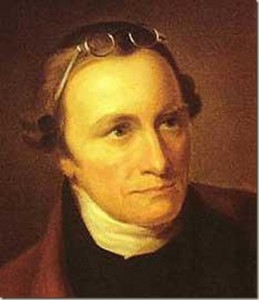 Those Founding Fathers who were against the U.S. Constitution included Thomas Jefferson, and Patrick Henry. Both of them thought that the Constitution did not protect the average citizen enough.
 James Callender was the publisher of the Richmond Examiner and a friend who helped Jefferson get elected to the Presidency. But Callender wanted a job in Jefferson’s administration. Tom, however, knew his background, that he’d been run out of Great Britain for sedition and libel, and had been charged in America under the notorious Alien and Sedition Act, and that he was not a particularly honest person.