Jefferson’s Good Name

There are those who deem it necessary to besmirch the characters of GREAT men in the history of the Unites States. Much that is untrue has been said or written about Thomas Jefferson, Benjamin Franklin, and yes, even George Washington.

I do not know why some have chosen this path. I do know that it is tasteless, unseemly and unacceptable. We should have our heroes to look up to and fashion our own character about. By tearing them down, we do NOT lift ourselves up.

I have created a chapter in my book “Founding Fathers—Uncommon Heroes” to “debunking the rumors” and Myths about our heroes of history. read more
A Republic—If You Can Keep It!

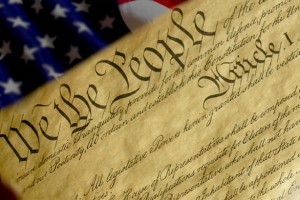
Benjamin Franklin was asked one question as he left the Constitutional Convention in Philadelphia after the meeting had adjourned on September 17, 1787. He was asked by a widow as Ben walked slowly down the steps: “Well, Doctor Franklin, what have we got, a Monarchy or a Republic?”
His response was quick, full of meaning, and authoritative: “You have a Republic—if you can keep it!”

A part of keeping such a Republic depends on the character of those who govern themselves. That’s because the people are the source of all lawful authority. Americans are free and inherently independent of all but THE MORAL LAW. America does not have a unified religion or a common theology, but we do have something we have to depend on for our freedom. That is a common morality shared by all citizens and that morality is rooted in faith and reason. read more

Thomas Jefferson and the Crime Commission

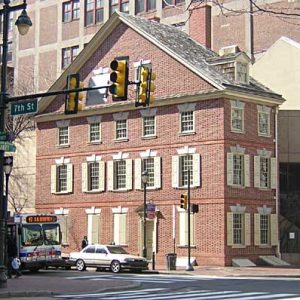
After reviewing some things I have in common with John Adams, I had to remember why I started studying the Founding Fathers anyway. As a young lawyer I was appointed by the mayor of Phoenix, Arizona, to be a member of his “Citizens Crime Commission,” a group of volunteers who met monthly and discussed methods the Mayor could use to alleviate crime in the City.

In those days, every major city in America had such a commission. There was a National Citizens Crime Commission. It was 1976, the Bicentennial of the Declaration of Independence. The National Commission was holding its national convention in Philadelphia that year. I was elected to represent the Arizona Crime Commission at the national convention. What an honor. read more

James and Dolley Madison

You will remember that Thomas Jefferson was the U.S. President from 1801 to 1809, and he selected James Madison, a fellow Virginian, as his Secretary of State.

But do you recall that Martha Jefferson had died before Tom became President? So Jefferson was a widower in the White House. He asked if James would allow Dolley to occasionally serve as the official hostess for State Dinners and other events at the discretion of the President. James thought that would be a benefit to both of them, and gave his approval. read more

Martha Chooses Thomas Jefferson

After their marriage, Tom and Martha began their trek to the as yet only minimally completed Monticello. They had to travel more than 100 miles without plane, or boat, or automobile. In the cold and on not quite decent roads. (She must have really loved Tom!)
When they finally arrived, Martha got her first view of the partly completed mansion. Well, it wasn’t a mansion yet. They arrived in the midst of a blustery snowstorm. Martha got her first view of her new home. The still small new home clung to the top of a hill and was dark and empty. read more

Thomas Jefferson and Martha

The love story between Tom and Martha is so beautiful and enduring that it will be difficult to put any feeling into it in these few words. Jefferson was a young lawyer in Virginia, having earned his degree after 5 studious years. He graduated from William and Mary College in Williamsburg. His mentor was William Wythe, one of the signers of Tom’s Declaration of Independence.

Tom was good friends with Patrick Henry and they sometimes socialized together at dances and parties in Williamsburg. They both played the violin—sometimes at these get-togethers. And both were members of the House of Burgesses. read more

Thomas Jefferson’s Early Life

ThomasJeffersonThomas Jefferson grew to be nearly as tall as his fellow Virginian, George Washington. Washington’s physician left his records listing the height of Washington as 6’ 3 ½ s” inches exact! Tom’s height was listed as 6’ 2 ½”.

Both men grew up as natives of Virginia and both were known as great horsemen, with the nod going to Washington as the slightly better rider. Both of them also learned a great deal from their fathers, despite losing them at an early age. Tom’s father, Peter, died in 1757, when Tom was only 14. read more

Patrick Henry’s Last Words

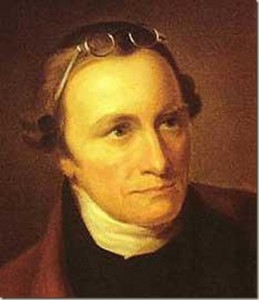
PatrickHenryAbout all that anyone knows about Patrick Henry is that some time in history he gave a great speech which included the words: “Give me liberty, or give me death!” And that he did. But he did much more.

He became a lawyer after studying for the bar for only 5 weeks. He spoke the words that caused the flame for independence to burn in the breast of Thomas Jefferson, his close friend. At the end of this speech he declared: “Caesar had his Brutus, Charles the First his Cromwell, . . .and George the Third . . .” read more

Thomas Jefferson’s Speech

President Donald Trump gave a stirring speech last night to a joint session of Congress. Even though he said some things that should be acceptable to any American citizens, he was ignored by the Democrats in Congress, and lambasted by the media. We, as a nation have become so divided by political parties that it is somewhat disconcerting.

ThomasJeffersonI wonder if Thomas Jefferson would have been so dismissed by the opposite party when he spoke to the nation. When he spoke he advocated that any political problems of the past decade be buried in order for Americans to unite. Here is what he said in his inaugural speech: read more

George, Tom, and Rutherford

Landsdowne paintingThe new leader of the Democrat party slams President Trump as the “worst president ever.” I suppose he lived through all of them.

The fake news continues to stream as if it is real. Emotions seem to have taken over from real reporting. This isn’t news at all. George Washington seems to be the only President that didn’t get hit too much by the press, although even he had some tough reports. Here’s a report that might interest you:

Headline “Bogus President.” Story: “After the hotly contested 1876 election, the Washington Post insisted that the Democratic nominee, Samuel J. Tilden, was the winner. A congressional committee determined that the new president was Republican Rutherford B. Hayes, but the Post refused to accept the verdict. For the next four years the newspaper churlishly referred to President Hayes as “the Bogus President,” “the acting President,” and “his fraudulency.” read more