
 Most of us remember a little bit about the Revolutionary War as we learned it in our youth. We can recall the heroic efforts of Colonel Knox at Boston as he was requested to recover lost cannon and other materiel lost at Fort Ticonderoga. We remember the victory at Dorchester. Then the move to New York, where George and his valiant soldiers were chased from Long Island, lost at several posts along the retreat, and moved to New Jersey.
The famous painting of George Washington and his military crossing the Delaware reminds us of his small but miraculous victories at Trenton and at Princeton. Spirits were raised again for the battles.
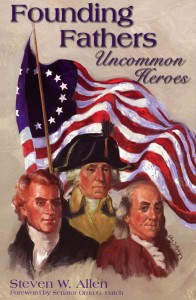
 After Thomas Jefferson completed his draft of the Declaration of Independence, he submitted it to the committee ordained for that purpose. They made only a few changes or suggestions. Then it was placed before the whole Congress for its adoption.
 John Adams who had spoken fervently in Congress that such a proposition should definitely be approved, was excited. He was so proud of this accomplishment that on July 3, he wrote home to Abigail:
 Several years ago, the King at the time told a friend how he had sent 14 of the brightest young men of Rumania to receive some training for future service in the government. He had sent 7 to England and another 7 to the United States of America, to study the respective political and even economic systems.
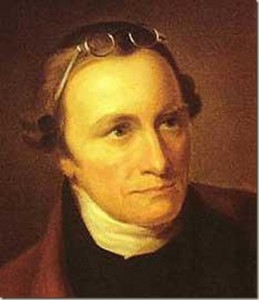 Those Founding Fathers who were against the U.S. Constitution included Thomas Jefferson, and Patrick Henry. Both of them thought that the Constitution did not protect the average citizen enough.
 The printing press with movable type was invented by Johannes Gutenberg (1398-1468). That enabled him to print the first Bible. But it didn’t come easily for Johannes. He had to borrow money. He first borrowed 800 guilders from a friend and partner to found his printing business.