
That America began as a Christian nation is just based on history. Those who haven’t studied the Founding Fathers’ intent, or our foundational documents argue that this isn’t so. But once you have read about the lives of George Washington, Thomas Jefferson, and even Benjamin Franklin, you can’t help but come away with an admiration of their belief and Faith in Jesus Christ.
 C. S. Lewis, a Christian Writer (The Chronicles of Narnia) of his day (1898-1963) had an interesting way of explaining things. Another writer said of him: “The mere Christianity of C. S. Lewis is not a philosophy or even a theology that may be considered, argued, and put away on a shelf (kind of like our debate about being a Christian nation).
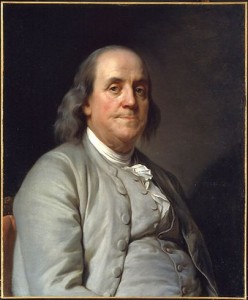 For Benjamin Franklin debates about religion were counterproductive. He always tried to shy away from taking a stand when such matters came up in his presence. He had distinct view, but preferred to keep them to himself. However his writings are full of his thoughts about character, belief, religion and even chastity.
 In another one of his books, “The Path to Prosperity” he gives this wise counsel: “Money does not constitute true wealth, nor position, nor power, and to rely on it alone is to stand upon a slippery place.
 Benjamin Franklin and John Adams were commissioned to travel to New York to meet with the British at the request of Lord William Howe, a British General. As the two traveled to the scheduled meeting to try to resolve the problems that had caused the Revolutionary War, they had to spend a night at an Inn.
 There are those who deem it necessary to besmirch the characters of GREAT men in the history of the Unites States. Much that is untrue has been said or written about Thomas Jefferson, Benjamin Franklin, and yes, even George Washington.
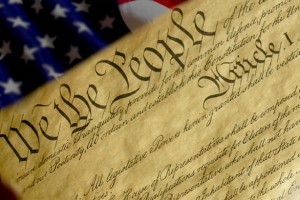 Benjamin Franklin was asked one question as he left the Constitutional Convention in Philadelphia after the meeting had adjourned on September 17, 1787. He was asked by a widow as Ben walked slowly down the steps: “Well, Doctor Franklin, what have we got, a Monarchy or a Republic?”
 Then again I’ve gotta add the story about Benjamin Franklin. I read his Autobiography when I was in 8th of 9th grade. I liked it. I didn’t really realize that I had actually learned some lessons in character by just reading this wonderful, easy to read book.
 After reviewing some things I have in common with John Adams, I had to remember why I started studying the Founding Fathers anyway. As a young lawyer I was appointed by the mayor of Phoenix, Arizona, to be a member of his “Citizens Crime Commission,” a group of volunteers who met monthly and discussed methods the Mayor could use to alleviate crime in the City.
 The parents of Benjamin Franklin don’t receive much fanfare, notoriety, or acclaim about the lives they lived. Ben talks a little about them in his Autobiography. One of the things they taught Ben was to obey the commandments of God. As a result, he did honor them. After all, Honor thy Father and Mother is the first commandment with a promise—that your life may be long in the land.