 You may have missed it but the Revolutionary War ended in 1781 at Yorktown, VA. The particulars of that battle were amazing. So was the outcome. British General Cornwallis surrendered his army after the valiant efforts of the Americans and the French.
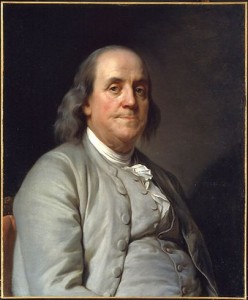
After the defeat at Yorktown, a friend of Benjamin Franklin approached him and said: “It looks as if the battle for independence is finally over.”
Franklin replied: “Sir, you are mistaken. The Revolutionary War may be over, but the battle for independence has just begun.”
 Benjamin Franklin was aware that he was dying in 1790. He was cared for by his daughter, Sara Franklin Bache. One evening a knock came at the door. A messenger carried a letter from President George Washington.
 In the 1750’s Ben Franklin was the Postmaster General of the Colonies. As you can imagine, travel was very different and difficult in those days. There were no Marriott Residence Inns or even a Motel 6! There were some local inns, which were not much more than saloons with an extra bed room or two. That meant a room with a bed in it, no showers or extras.
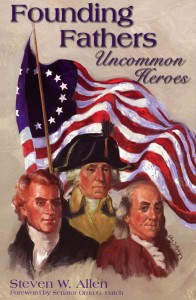 Betsy Ross was a recent widow, and she was a poor, struggling seamstress when the story goes, she was approach by a team, including General George Washington to create a new flag for the hope of a new nation. It was apparently a secret meeting. General Washington asked her for help in the preparation of a brand new flag, and a new concept for a struggling nation.
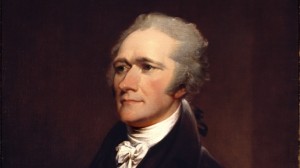 Alexander Hamilton said it this way: “The law . . . dictated by God Himself is, of course, superior in obligation to any other. It is binding over all the globe, in all countries, and at all times. No human laws are of any validity if contrary to this.”
 Several years ago while I was a successful practicing attorney, I was looking through the morning newspaper. Yes, we still had one on home delivery in those days.
 As you know, Benjamin Franklin was a printer since his early days when he was apprenticed to his brother, James. He eventually moved on from Boston to Philadelphia, where he became a very successful printer with his own company.