 This week’s commemoration of Good Friday and then Easter Sunday is an important milestone in the Christian Religion. It was honored by our Founding Fathers. Thomas Jefferson said that the “Wee Little Book” he created is “proof positive that I am a real Christian . . . .”
Benjamin Franklin’s “Project for Moral Perfection” had him working on his character to imitate the humility of Jesus. George Washington paid for his own seat or booth at the Christian Church in Alexandria which was close to Mount Vernon.
 C. S. Lewis, a Christian Writer (The Chronicles of Narnia) of his day (1898-1963) had an interesting way of explaining things. Another writer said of him: “The mere Christianity of C. S. Lewis is not a philosophy or even a theology that may be considered, argued, and put away on a shelf (kind of like our debate about being a Christian nation).
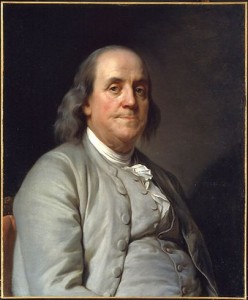 For Benjamin Franklin debates about religion were counterproductive. He always tried to shy away from taking a stand when such matters came up in his presence. He had distinct view, but preferred to keep them to himself. However his writings are full of his thoughts about character, belief, religion and even chastity.
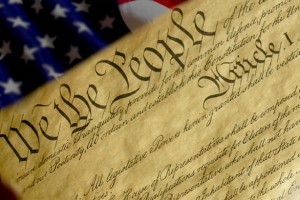 Benjamin Franklin was asked one question as he left the Constitutional Convention in Philadelphia after the meeting had adjourned on September 17, 1787. He was asked by a widow as Ben walked slowly down the steps: “Well, Doctor Franklin, what have we got, a Monarchy or a Republic?”
 He had some interesting help along the way. Alexander Hamilton, James Monroe, General von Steuben, Nathan Hale, and even Thomas Paine. Paine was there when Washington crossed the Delaware for that famous battle of Trenton (and Princeton).
 The parents of Benjamin Franklin don’t receive much fanfare, notoriety, or acclaim about the lives they lived. Ben talks a little about them in his Autobiography. One of the things they taught Ben was to obey the commandments of God. As a result, he did honor them. After all, Honor thy Father and Mother is the first commandment with a promise—that your life may be long in the land.
 When someone says that America isn’t a Christian nation, I understand. It’s just that I believe they don’t know history. American principles are based on the Christian religion and on the Bible. No, that’s just history.
 Yes, our Founding Fathers had many troubles, scores of obstacles to overcome. Things that had never been thought about before, not to mention, done. But they went ahead and with the help of their faith, their fellow countrymen, and honorable leaders, they went ahead and did it!
 “Music is a part of our history. It is an expression of who we are and the times we’ve known, our highs, our lows, and so much that we love. Take away American music from the American story and you take away a good part of the soul of the story.