Benjamin Franklin’s Project for Moral Perfection

Ben Franklin thumb pictureFranklin explains in his Autobiography his Project for Moral Perfection. He decided as a youth that he should try to become as perfect as he possibly could in thirteen character traits he described in his book. He worked on this project all his life, and I believe he did become practically perfect in most things.

One of the traits he wanted to develop was that of Order, which he defined as “Let all your things have their places; let each part of your business have its time.”

Of all his listed traits, he said this one gave him the most trouble. But then look at all he accomplished in spite of that trouble! read more

Mount Vernon Love Story

GeorgeWashingtonMany of you are fans of Mary Higgins Clark and her murder mystery novels. What you may not know is that Ms. Clark wrote an interesting book about George and Martha Washington. It’s titled “Mount Vernon Love Story, A Novel of George and Martha Washington.”

Sure, it’s a novel, much like her many other books, but it is based on extensive research, and on her love for Martha Washington. It’s charming, insightful, and very entertaining. I highly recommend it. Not only for the Story of the First President of the United States, but also for the background story about his dear, and beloved wife. read more

The 1801 Election—Thomas Jefferson Wins!

ThomasJeffersonToday he probably wouldn’t win, but in 1801 Jefferson carried the day. We wonder why we don’t have candidates like him any more. It’s because of the advances in technology, especially TV. Tom wouldn’t be very good, he wouldn’t come across very well on television. He had a high kind of squeaky voice, a funny looking complexion, and red hair. He was a wise man and an outstanding writer, but . . . .

Jefferson was the first President to reside in the new capitol at Washington, D.C. He was a widower in the White House, but was very well received by the people. And they approved his policies: read more

More Founding Fathers Myths

Ben Franklin thumb pictureSeveral scandalous stories about Benjamin Franklin have also been promulgated by pseudo-historians and others over the years. William was treated by Ben as a legitimate son, although some historians now believe that Ben married Deborah when she was pregnant with William, to save her reputation.

There is not good evidence of any other illegitimate children, but rumors have sprung up anyway. One of Ben’s rules in his Project for Moral Perfection, which he observed all his life, was the character trait of chastity. It’s hard to believe any violation of this trait given Ben’s drive for self-improvement. read more

Myths Relating to the Founding Fathers

Yesterday I attended a meeting of the Arizona Chapter of the National Speakers Association. One of the ThomasJeffersonpresenters, Rick McPartlin, spoke of “Myths and Principles” as they relate to professional speakers. It was extremely interesting.

Rick defined myths as: “a partially true idea or story that is believed by many people but is not true.” A principle is “a fundamental truth or proposition that serves as the foundation for a system of belief or behavior or for a chain of reasoning.” Pretty interesting stuff. read more

Communication

colorful-calendar-2016-template-free-vectorSometimes the message in the Peanuts comic strip is just too close to reality. I guess that’s why it works so well! Here’s one example:

Charlie Brown and Linus are walking together. Linus says: “Your trouble Charlie Brown, is that you live by mottos and trite sayings.”

Then Linus continues: “You really thought that if you gritted your teeth it would help you become a hero. Well, there’s more to life than gritting your teeth. . . .

“Charlie Brown, do you understand what I’m trying to tell you?” read more

John Adams and the Law

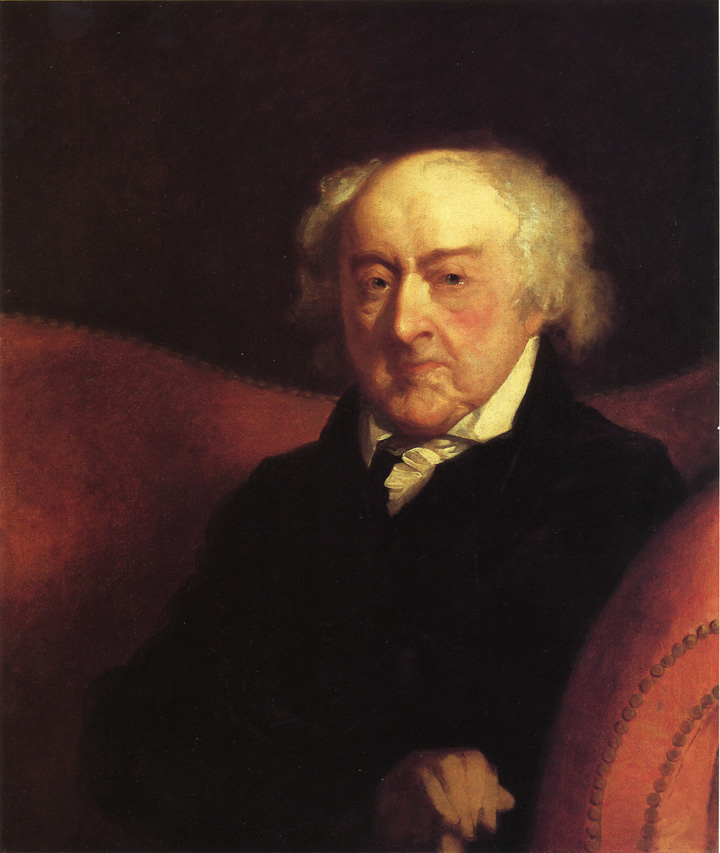
JohnAdamsAs you may recall, John Adams accepted the representation of the British soldiers who were charged in the Boston Massacre. No other colonist lawyer was willing to accept their representation for fear of losing standing with friends and countrymen.

Adams felt it was his duty as a lawyer, and representative of the judicial system to step in where they needed someone to speak for them; to see that justice was done and not miscarried because of the emotions of the Bostonians at the time.

John did not only an admirable job, he succeeded in have most of the soldiers acquitted under the law. During his argument in December, 1770, he said: read more

Happy New Year—Thanks to Christ

When it first came out, one of my friends said that I should read Bill O’Reilly’s book “Killing Jesus.” My friend went on to say that he thinks that O’Reilly must have read my book “The Illegal Trial of Christ” since much of what he wrote sounded like what I had explained in my book.

As I read O’Reilly’s book, I knew that the authors had to take an impartial religious stand in their method of writing. I didn’t have to in my book. I explained many of the same things, but I had an unabashed impartiality towards Christ and his life and death. Because of that, my book has a distinctly more religious slant. read more

Thomas Jefferson as A Speaker

ThomasJeffersonSpeaking of professional speakers, one of the Founding Fathers who wouldn’t be one would be Thomas Jefferson! Although he was very intellectual, wise, and erudite, he was not a good speaker. He could write better than the best of them. But speak he could not, and he knew it. For that reason alone, he probably couldn’t be elected President today.

His voice was high and “squeaky”. He wrote the initial draft of the Declaration of Independence without book or pamphlet as references. Only his background and training as a lawyer guided him through his writing. But he didn’t speak up on behalf of his draft at the Continental Congress. He allowed John Adams to represent him and the committee in advocating adoption of the Declaration. read more

Give Me Liberty

PatrickHenryI received my monthly “Speaker” magazine today. I am a professional speaker and have been a member of this fine Association for many years. Of course, my interest has been speaking about the Founding Fathers and the way they taught character and leadership.

But today as I looked at my new magazine, I couldn’t help but think that there was no National Speakers Association in the 1700’s. And indeed, there were no professional speakers in that day either. There were, however some very great speakers. John Adams, with his persuasive ability comes to mind. read more