The Pledge of Allegiance and National Anthem

800px-Mtchoirandorchestra_ConferenceCenter_(cropped)I am a long time football fan and a patriot. I love to watch football games, NFL, Colleges, even some high school. I also love our country. The Pledge of Allegiance is special to me. We said it every morning while standing in our classrooms, hands over our hearts, facing the flag, in elementary school. Then somewhat less in high school.

It was important to sing the national anthem in assemblies, plays, and especially prior to sporting events. Red Skelton made patriotism even more widespread with his recording of him reciting the pledge and explaining what it meant to him. read more
Americans Must Vote

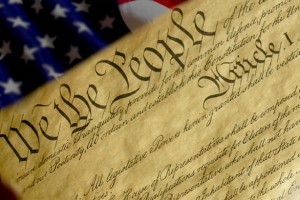
constitutionThe Declaration of Independence together with the United States Constitution created a government never before seen by man on this earth. It is a government of the people and by the people. The people have a mandate to chose their own leaders. To vote!
This election is about who will sit on the Supreme Court, as much as it is about who will be President of the United States. After all, Supreme Court Justices are appointed for life—no elections, no impeachments. A President presides for 4 years, or perhaps 8. Justices may serve for 10, 20 or 30 years. For life, or until they choose to retire, as did Justice Sandra Day O’Connor. read more

Founding Fathers

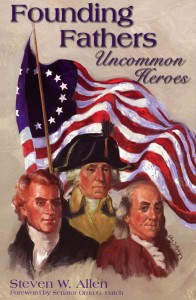
Founding Fathers coverHere are just a few words I think you should be familiar with. Are You?

Founding—those who take the first steps in building.
Fathers—to make oneself the founder, producer, or author of.
Uncommon—not ordinarily encountered, unsusual.
Heroes—exhibiting or marked by courage and daring.
Colonists—member or inhabitant of a colony.
Colony—a body of people living in a new territory but retaining ties with the parent state.
Farmers—a person who cultivates land or crops or raises livestock.
Mechanics—a manual worker or machinist.
Statesman—one versed in the principles or art of government.
Representative—standing or acting for another.
Vote—to cause to be cast for or against a proposal.
Monarchy—individual rule or absolute sovereignty by a single person.
Democracy—government by the people especially rule of the majority.
Republic—a government in which the supreme power resides in a body of citizens entitled to vote and is exercised by elected officers and representatives responsible to them and governing according to law. read more

Old Constitution or New Constitution

constitutionMany new students of our form of government seem to think they have a better idea. We should try more direct democracy, or perhaps a modern socialism, or even communism would work better.

I’ve got a consideration for everyone who wonders about this. Our Founding Fathers were so concerned about their new government they made world governments a serious study. They studied Greece, Rome, and even Israel. They knew about Monarchies and dictatorships. James Madison in particular made it a serious study. How do governments operate and how do they eventually work. read more

The American Way

ThomasJeffersonGeorge Washington, our first President, said this: “Government is not reason, it is not eloquence, it is force; like fire, a troublesome servant and a fearful master. Never for a moment should it be left to irresponsible action.”
Thomas Jefferson wrote: “We hold these truths to be self-evident, that all men are created equal, that they are endowed by their Creator with certain unalienable rights, that among these are life, liberty and the pursuit of happiness.”

That’s where we get out freedoms from. Not from the government, but from God. But it’s a troublesome servant and a fearful master. We have to stay in charge, not give it away. read more

Patrick Henry and Thomas Jefferson Make Music

PatrickHenryTonight my wife and I went to a concert here at Brigham Young University. We are here for an education conference. There is some nightly entertainment – if you pay extra.
The evening production we choose was Jenny Oaks Baker and her Family of Four. Jenny is a world class violinist who has played as a soloist at Carnegie Hall, Lincoln Center, and the Library of Congress (and you thought they were just about books!). She has also played with several Orchestras of renown and with the Mormon Tabernacle Choir and Orchestra at Temple Square. read more

James K. Polk as President

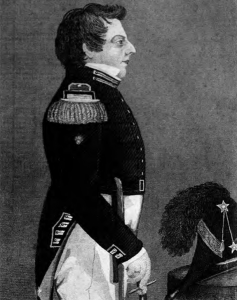
Joseph_Smith_Jr._Lieutenant_General_Nauvoo_Legion_by_Sutcliffe_Mauds-Ley_-1842I am attending a week long education summit at BYU. One of the classes is about the Presidential election in 1844. It seems to have some similarities with our current election.

One of the late entry candidates for President was General Joseph Smith of Illinois. Most of the candidates, like Martin Van Buren, running for re-election, and others, didn’t really answer the problems that existed at the present time. No way to give credibility to the banks (there was a banking problem), not any real discussions about solving the slavery issue, and no foresightedness about increasing the size of the country to the western ocean. read more

Founding Fathers, and Others, on Forgiveness.

Mark_Twain_by_AF_BradleyThere seems to be a difficulty these days with rendering complete forgiveness to someone who has injured one in some fashion. So as I came across some interesting quotes about forgiveness, I thought I would share them with you. The first one is from Josh Billings, who was introduced to you yesterday.

“There is no revenge so complete as forgiveness.” -Josh Billings

“‘Tis more noble to forgive than to revenge an injury.” -Benjamin Franklin

“If you are suffering from a bad man’s injustice, forgive him lest there be two bad men.” -Saint Augustine read more

Benjamin Franklin and The Art of Criticism

Mark_Twain_by_AF_BradleyThe saying or quotation by Josh Billings (I don’t know who he was), seems to me to be filled with too much wisdom for our Protesters to understand today. But I’m going to quote it anyway:

“To be a good critic demands more brains and judgment than most men possess.”

The protestors, and critics against our brave men in blue, and women, seem to have less judgment and brains than would qualify them to be anything but a mindless follower. They can’t seem to understand that it is the police who keep them protected from those who would otherwise do them harm. The statistics show that their beliefs are built upon a false premise. They should look at means to give back to their communities, rather than take from them and cause destruction and disharmony. read more

Independence Declared

On July 2, 1776, the proposition put forward by Richard Henry Lee, of Virginia, that these colonies have a right to be free and independent of Great Britain, was adopted by Congress.

JohnAdamsJohn Adams who had spoken fervently in Congress that such a proposition should definitely be approved, was excited. He was so proud of this accomplishment that on July 3, he wrote home to Abigail:

“Yesterday the greatest Question was decided which ever was debated in America, and a greater perhaps never was nor will be decided among men . . . The Second Day of July, 1776, will be the most memorable Epocha [sic}, in the History of America—I am apt to believe that it will be celebrated, by succeeding Generations, as the great anniversary Festival. It ought to be commemorated, as the day of Deliverance by Solemn Acts of Devotion to God Almighty. It ought to be solemnized with Pomp and Parade, with Shews [sic], Games, Sports, Guns, Bells, Bonfires, and Illuminations from one end of the Continent to the other from this Time forward forever more.” (Capitalization as in the original letter). read more