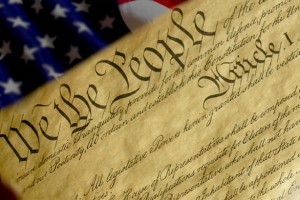
 As you know our U.S. Constitution has 27 Amendments. The process of Amending the Constitution is explained in Article V of the document itself.
The 27th , and last approved Amendment, was submitted by James Madison along with what became our Bill of Rights. It’s a good one and it finally received approval of Michigan, the last needed state, on May 7, 1992. It says that Congress can’t give itself a raise unless a national vote has intervened before one can be granted. Why didn’t that pass with the other 10 Amendments of the Bill of Rights? I dunno.
 French Huguenots, Apollos Rivoire and Deborah Hitchborn, made their way to Boston, Massachusetts, after being determined to leave France. They may have been in some kind of trouble. In America, Apollos Rivoire changed his name to Paul Rivoire, and then later to Paul Revere. Deborah became Deborah Revere. They had a son and named him Paul Revere. You may have heard of him.
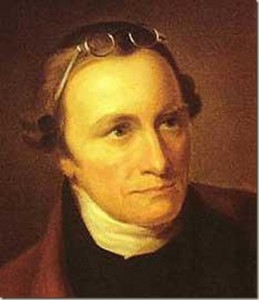 In addition to Thomas Jefferson, another Virginian, Patrick Henry was opposed to ratification of the newly proposed Constitution. As the Constitution went around to the various States for adoption, the States held their own conventions to approve or reject it.
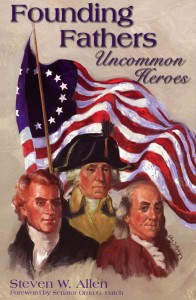 Today I believe the Founding Fathers are looking at our government with surprise and disbelief. The leaders of our nation seem to have forgotten that the Constitution starts out with these Words:
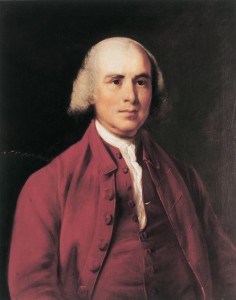 James Madison, the Father of the Constitution, wrote a message to the States complete with a dire warning that still holds true today. It’s quite a long sentence and paragraph (I took the liberty of dividing the paragraph in two for easier reading). Nevertheless, I’m going to repeat it here for you:
 Yesterday’s post reminded me of a conversation between Schroeder and Lucy in a Charles Schultz Peanuts cartoon. Schroeder is, of course playing his toy piano. Lucy, leaning on it asks: “I have an historical question for you.”
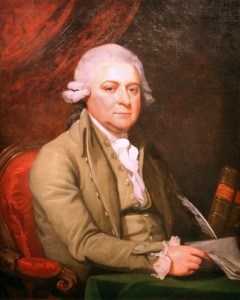 In the early years of our American nation, religion fared very well even in the Supreme Court. Joseph Story (1779-1845) served as a Supreme Court Justice at the age of 32. He was the youngest to serve in that position. Her served from 1811 to 1845. He wrote several remarkable decisions of the High Court. The most memorable was the Amistad decision (now a movie), which he read out loud in the Court.
 The Founding Fathers were men of wonderful and noble faith. You only have to read a selection of some of their writings to get a glimpse into this. John Adams was one who believed that the new nation should be an example of piety and righteousness to the world. He relied on Providence for help in his career. Providence was a popular appellation for the Heavenly Father out of respect for his name.