 I can recall an occasion when I was called as an expert witness in a Federal case. I was sworn in and asked several questions, first to establish my credibility as an expert, then to elaborate on some conditions prevalent in the court case.
As I tried to answer all the questions, there came one witch I felt that I needed to explain the answer more completely. The judge leaned over and said: “That’s enough, Mr. Allen, you’ve answered the question.” I feel bad that I didn’t have the presence of mind to respond: “But I’ve been sworn in to tell the truth, the whole truth . . . and as yet I haven’t been able to explain the whole truth!”
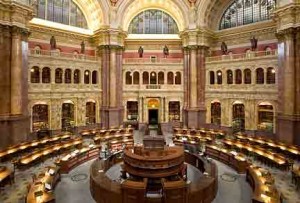 “I cannot live without books, “ Jefferson admitted to John Adams. He sold his vast library of books to Congress to replace the Congressional Library which had burned in the war of 1812.
 While George Washington was laboring away trying to convince the soldiers under his command to be vigilant and courageous, he was joined in camp by a patriotic writer named Thomas Paine. Paine had written a booklet, “Common Sense”, that gave men more insight into the blessings of freedom and liberty.
 OK. After the shenanigans in Iowa, and the politician sounding more like politicians than like real Americans, I am more convinced than ever that we need a businessman at the head of the country, rather than more politicians.
 The current grumbling about the votes or caucuses in Iowa is evidence that the more things change, the more they stay the same. Perhaps some shenanigans were pulled. But then, most of them are politicians—so what do you expect?
 The Founding Fathers must have believed a democracy was the way to go, if what they gave us with the United States of America is really a democracy. No on both counts.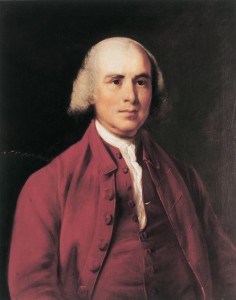
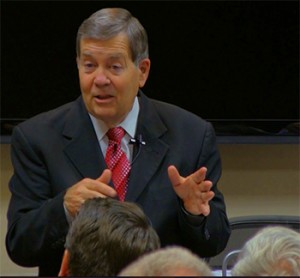 As a member of the National Speakers Association, I was pleased to make a personal acquaintance with Charlie “Tremendous” Jones at one of our meetings. He was a large speaking presence. During his presentation he actually picked on me!
 Yes, I usually find a story about one of the Founders of our Nation to report about in our blog. But today I found a quote that I believe George Washington, because of his “Rules of Civility,” and Benjamin Franklin, because of his “Plan for Moral Perfection,” and even Thomas Jefferson, because of his love of literature, would adopt and accept as worthy of acceptation.
 Tom and Martha were married on her father’s plantation in Virginia on New Years Day, 1772. He was 29 and she was a widow at 24. Tom described their marriage as “ten years of uncheckered happiness.” Martha died at the age of 33.