About Steven W. Allen, J.D.

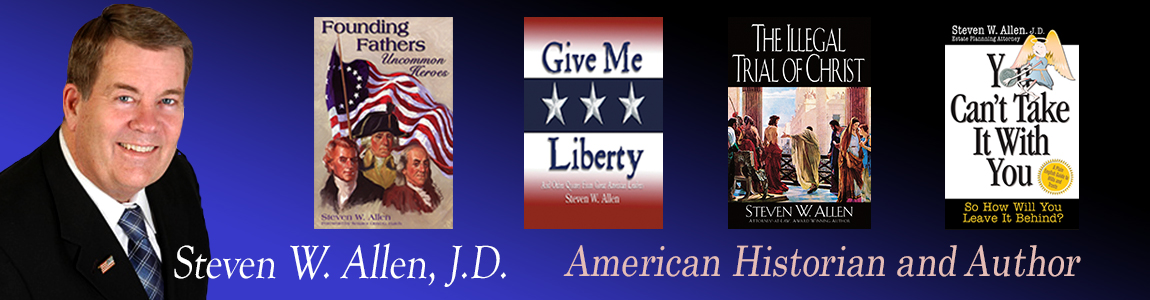
Steven W. Allen, J.D. is an author, speaker, and retired attorney. His book "Founding Fathers - Uncommon Heroes" is popular with all ages and is used in many schools. See his other books at www.StevenAllenBooks.com

Benjamin Franklin and Religion

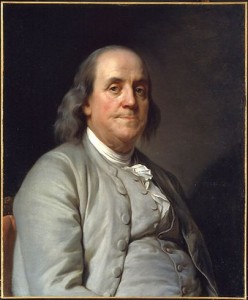
Ben Franklin thumb pictureBenjamin Franklin responded to his sister Jane Mecom of Boston in a letter in 1743. Jane was apparently concerned about Ben’s slightly unorthodox view and convictions.

Ben carefully explained his beliefs and stated gently: “There are some things in your New England doctrines and worship, which I do not agree with, but I do not therefore condemn them, or desire to shake your belief or practice of them.”

At the age of 37, Ben was a little ahead of his time relating to religious toleration soon to be called Freedom of Religion, because under the U.S. Constitution, First Amendment, we are guaranteed that no Government Religion would be established (Amendment I, December 15, 1791). read more
President Washington’s Last Words

Earl Warren was born on March 19, 1891. He was appointed by President Dwight Eisenhower to become the 14th Chief Justice of the U. S. Supreme Court in 1953. In law school we read lots of his decisions on cases he adjudicated. He was a learned gentleman and usually kept a copy of the Constitution with him, in his suit pocket or his briefcase. He thought we all should study it. He passed away on July 9, 1974, the year after I graduated from Law School.

As he approached the age of 40, he changed his attitude on growing old. He seemed to be upset at reaching that milestone when an older friend of his tried to cheer him up. The advice from his friend was: “Don’t complain about growing old—many people don’t have that privilege!” read more

Benjamin Franklin’s Humility

Ben FranklinIn Benjamin Franklin’s Project for Moral Perfection he listed 13 characteristics that he wanted to improve during his lifetime. Yes, he wanted to become perfect. He had trouble with one of them and said:
“My list of virtues contain’d at first but twelve, but a Quaker friend having kindly informed me that I was generally thought Proud; that my pride show’d itself frequently in conversation; that I was not content with being in the right when discussing any point, but was overbearing, and rather insolent, of which he convinc’e me by mentioning several instances; I determined endeavoring to cure myself, if I could, of this vice or folly among the rest and I added humility to the rest.” read more

All Things Benjamin Franklin

Ben Franklin thumb pictureIn Ben’s Project for Moral Perfection, he listed the third principle, “Order” as possibly the hardest of men’s shortcomings to overcome or be perfect in. He defined it as “Let all your things have their places; let each part of your business have its time.”

He worked on this character trait judiciously for all his life, but once compared it to shining an ax to be brilliant while turning it on a grinding wheel. This gave him more trouble than most of his other character traits in his program to achieve perfection. read more

Lighten Up Says George!

“Why did the cat fall into the well?”

“I don’t know, why?”

“Because he couldn’t see that well!”

Dana Perino, Fox Five

Just thought you’d enjoy that!      GW Rules

“Just hoping you’re smiling,
delighted, content . . . .
And totally happy,

One hundred percent!”

Dr. Suess

SMILE!!

“If you Cough, Sneeze, Sigh, or Yawn, do it not Loud but Privately; and Speak not in your Yawning, but put your Handkerchief or Hand before your face and turn aside.” George Washington’s Rules of Civility. read more

Connecticut Yankees

OLYMPUS DIGITAL CAMERAToday the citizens of Connecticut will vote in their primary elections. Did you know that the State anthem of Connecticut is “Yankee Doodle”? I didn’t.

That is a very interesting song with a fascinating history. It was sung by the British during the French and Indian War to signify that the colonists weren’t very good soldiers. Not disciplined, not brave, not very smart.

Yankee Doodle went to town
A ridin on a pony.
Stuck a feather in his cap and called it macaroni. Etc. Etc.

It was later sung by the British in the Revolutionary War to indicate their disdain for the rebels. Then it was adopted by some of the Revolutionary Soldiers, to throw it back in the face of the Redcoats. read more

George Washington and Walking Sticks

Landsdowne paintingIn the 1700’s walking sticks were all the rage in England. Everyone wanted one it seemed. The government, of course became quite worried. So there was a law passed that in order to stroll with the aid of a cane one had to purchase a license and abide by a strict set of rules.

It seemed that one of the rules prohibited the person with the stick from gesturing with or waving the stick in the air. He also could not hang the cane from his waistcoat, nor tuck it under his arm.

Gentlemen, being the gentle men that they were, seldom disregarded any of these rules. Thus there was never a cane mutiny. read more

Ben Franklin, Rainy Days and Libraries

Ben Franklin thumb picture

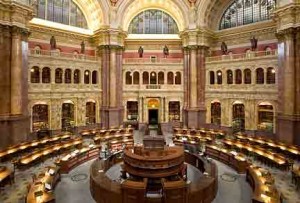
Benjamin Franklin credited libraries with turning common tradesmen into smart citizens. Especially on rainy days. Ben said it this way: “our people having no publik amusements to divert their attention to study, became better acquainted with books.” They didn’t have anything else to do on days with bad weather, rainy days.

Franklin began the first circulation public library in 1731 in Philadelphia, actually in all of North America. It soon caught on. Similar libraries were formed by other do good citizens in all the colonies. read more

Ben Franklin’s Introduction to Electricity Usage

Ben Franklin thumb pictureWhen Benjamin Franklin’s kite experiment proved lightning contained electricity, it opened up new studies about the use of electricity. One scientist trying to reproduce Franklin’s kite research was actually killed in the storm by the lightning!

I believe Ben would be proudly approving of what has happened with our multiple uses of electricity today. Look at the multitude of important jobs allied with electrical science in any way!

Just today, my wife and I are at a symposium in Scottsdale, Arizona, explaining the use of small bursts of electricity to increase blood flow in the human body. The device patented to do this is called a “Bemer”. This technology is not only being used by hospitals and doctors, but also by athletes and professional sports teams. It’s pretty amazing. read more