
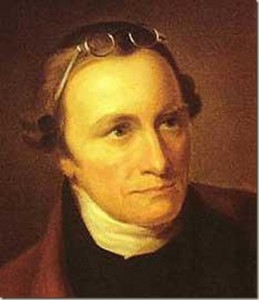
 Those Founding Fathers who were against the U.S. Constitution included Thomas Jefferson, and Patrick Henry. Both of them thought that the Constitution did not protect the average citizen enough.
Jefferson was still in France, but sent his reservations by letter to his friend James Madison, the Father of the Constitution. He encouraged James to continued to fight for a Bill of Rights.
Patrick Henry opposed the Constitution in the Constitutional Assembly held in Virginia to vote on the document. He made several long speeches against its adoption, some lasting all day. He made at least one speech almost every one of the 17 days of the State Convention. He also wanted a more specific Bill of Rights.
 In all the political turmoil of late, the conservative editorial writer, George Will, has just declared that he will withdraw from the Republican Party. He says they have left him.
 Abraham Lincoln, of course, was a lawyer and a politician. I think he lived by the above instructions, if unknowingly. He was also a great storyteller.
 The tale is told of Dave Randall, who was once the Customer Relations Expert for Scribner’s Rare Book Department. Randall had tried relentlessly to obtain one of an old collector’s thirteen copies of Thomas Jefferson’s Declaration of Independence. The owner stubbornly refused to let go of a single copy. He refused every overture attempted by Dave.
 The printing press with movable type was invented by Johannes Gutenberg (1398-1468). That enabled him to print the first Bible. But it didn’t come easily for Johannes. He had to borrow money. He first borrowed 800 guilders from a friend and partner to found his printing business.
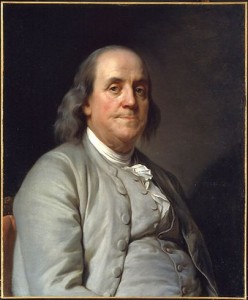
 After Benjamin Franklin was sent to France by Congress, John Adams was soon sent to join and assist him in his labors. Adams and Franklin were very different personalities. Ben was very patient, diplomatic, affable and even affectionate.
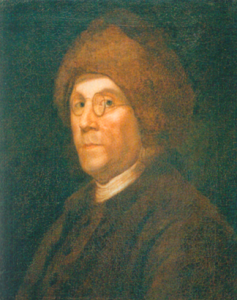 When Ben Franklin was sent to France to try to obtain an agreement from the French King for support in the Revolutionary War, he knew he would have to get himself noticed. Ben knew he had to make a great first impression! The French expected him to dress like their image of the Colonials. So he dressed that way.
 Of course you remember learning about Benjamin Franklin’s Farmer’s Almanac titled “Poor Richard’s Almanac”. As a printer, Ben knew of the business of Almanacs. Farmers relied on them to prognosticate the weather for their planting and harvesting seasons.
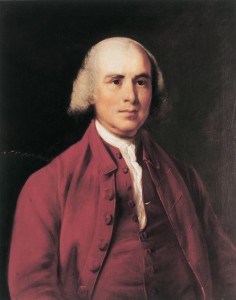 And James Madison, known as “The Father of the Constitution” also had no children of his own. He married Dolley Madison, who had children from a prior marriage, and who, like Martha Washington, was a widow when she married James Madison. He helped raise her children, but again they had no children together.