
 The first official flag of the United States of America had thirteen stars and thirteen stripes—all in recognition of the original thirteen colonies that became states. Some historians write about how George Washington visited with Betsy Ross in Philadelphia to design the original Stars and Stripes.
That flag kept growing. When Vermont and Kentucky were made a part of the Union in 1791 and 1792, Congress officially altered the flag and added two more of each, amounting to 15 stars and stripes.
Then when Tennessee, Louisiana, Ohio, and Indiana joined the Union, Congress had a new dilemma. They were worried that the flag would look like a farmers quilt if more states were eventually added to the Union, with a star and a stripe for each State of the Union. So Congress decided to revert back to the original number of Stripes, thirteen, and add a new star only for each new state. That’s why we have more stars that stripes on our Stars and Stripes. Good move!
-

By: Steven W. Allen, J.D.
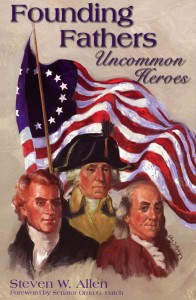
Steven W. Allen, J.D. is an author, speaker, and retired attorney. His book “Founding Fathers – Uncommon Heroes” is popular with all ages and is used in many schools. See his other books at www.StevenAllenBooks.com
-


-
The Federalist Papers
Constitutional Amendments
Founding Fathers and American Heroes
Founding Fathers and War
What About Benedict Arnold?
Books and Founding Fathers